
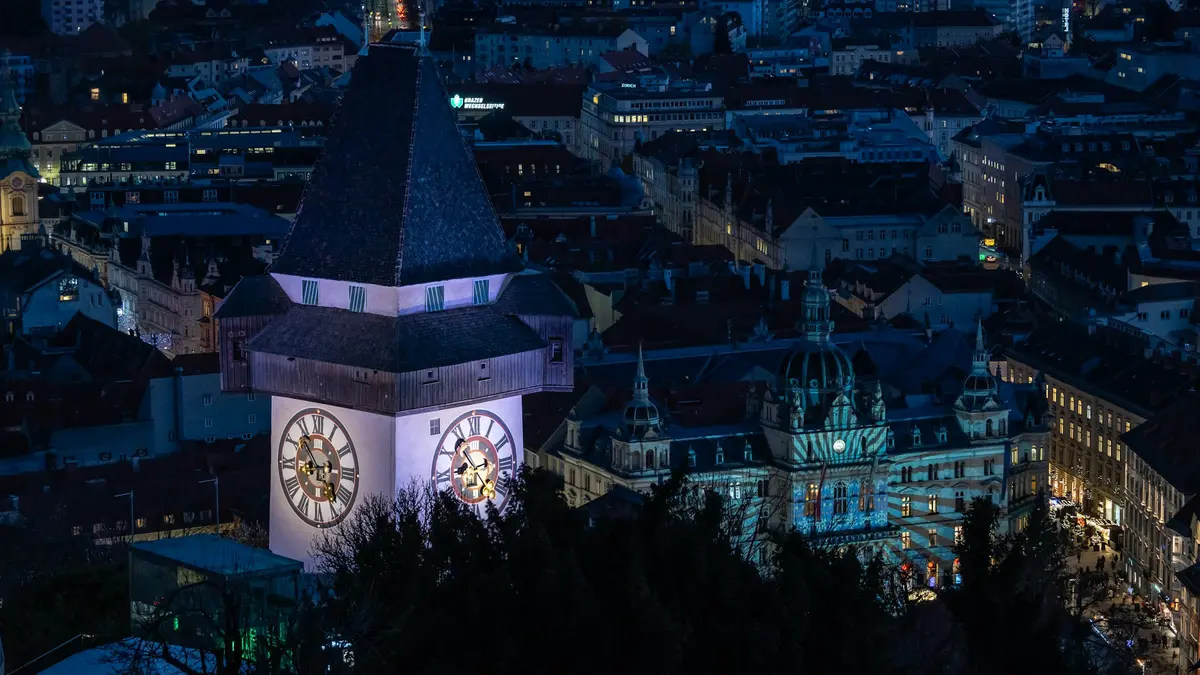
Austria will switch to winter time on Sunday, 25 October. In the early hours of the morning, clocks must be set back by one hour: at 3 am, they will go back to 2 am.
The change also means it gets light earlier, but it gets dark earlier at the end of the day.
Like other European countries, Austria changes its clocks twice a year: in spring, when summer time begins, and in autumn, when it reverts to winter time.
Most electronic devices, such as mobile phones, computers and smartwatches, update automatically. However, analogue clocks and some household appliances need to be set manually.
When does summer time start again?
Winter time will remain in force until 28 March 2027, when the clocks will be moved forward by one hour.
During the winter, Austria observes Central European Time (CET), which is UTC+1. In the summer, the country observes Central European Summer Time (CEST), which is UTC+2.
The same system is used by neighbouring countries, including Germany, Italy and Switzerland.
READ ALSO: When do the clocks change in Austria this spring?
Why does Europe still change the clocks?
The time change was introduced to make better use of natural light throughout the year. In summer, setting clocks forward provides more daylight in the late afternoon and evening.
The European Commission has cited research suggesting marginal energy savings.
In 2019, the European Parliament voted to end the mandatory time change across European Union countries.
However, the proposal didn't proceed because member states haven't agreed on how to implement it.
For now, the rule remains unchanged: in Austria, clocks are set forward on the last Sunday in March and set back on the last Sunday in October.
READ ALSO: Why Europe's changing of the clocks 'no longer makes sense'
Comments